
Pediatric Nitrous Oxide in Newport Beach, CA
Helping children feel calmer during dental care while remaining awake and responsive.
A Calmer Visit for Anxious Children
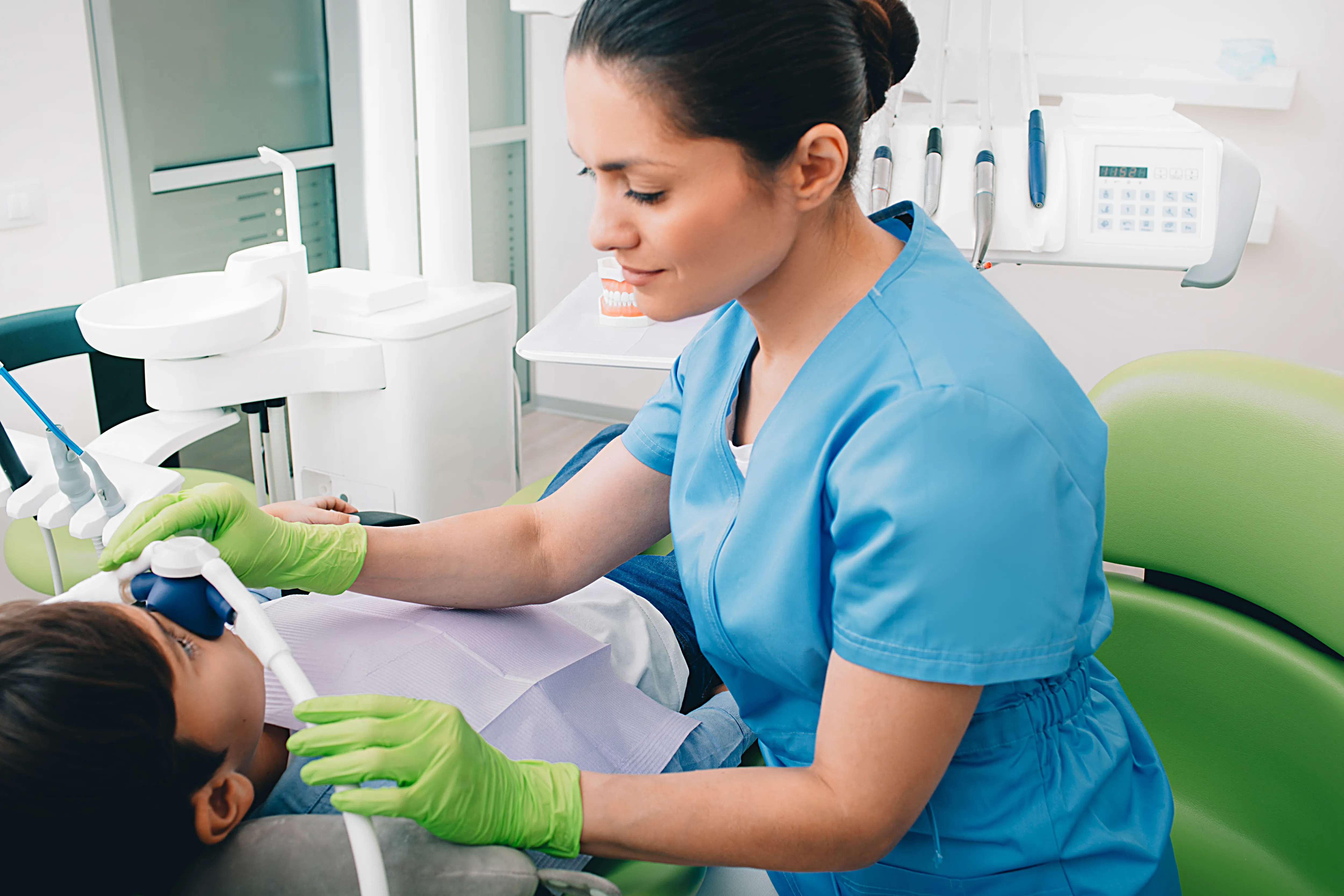
Nitrous oxide can help children feel calmer during dental care while still remaining awake, responsive, and able to communicate. Often called laughing gas, this gentle sedation option may be recommended when a child feels anxious or has difficulty sitting still.
Want to discuss sedation options? Call 949-706-7006 to schedule with Dr. Daghlian.
Relaxation Without Full Sleep
Nitrous oxide helps children relax without making them fully asleep. Your child can still hear Dr. Daghlian, answer simple questions, and respond to instructions during the appointment.
The relaxed feeling fades quickly after the mask is removed and your child breathes oxygen for a short period.
When Nitrous Oxide May Be Helpful
Dr. Daghlian may discuss nitrous oxide if your child:
What to Expect
What It Feels Like
Breathed in through a small nose mask. Within minutes, many children feel relaxed, light, or a little floaty.
During the Visit
Comfort and response are monitored throughout. Kid-friendly explanations keep your child informed.
After Treatment
The nitrous is turned off and oxygen clears the gas quickly, so the relaxed feeling fades fast.
Nitrous Oxide FAQs
Nitrous oxide is commonly used in pediatric dentistry and can be safe when recommended appropriately and monitored by a trained dental professional. Dr. Daghlian will review your child's health history before determining whether it is appropriate.
No. Nitrous oxide may not be right for every child, especially if there are certain medical concerns, breathing difficulties, severe congestion, or an inability to tolerate the nose mask. Dr. Daghlian will evaluate your child before recommending it.
Not always. Nitrous oxide helps with relaxation and anxiety, but local anesthesia may still be needed for certain procedures. Dr. Daghlian will explain what comfort measures are recommended for your child's treatment.
Use simple, positive language. You can tell your child they will breathe through a small nose mask that helps them feel calm during the visit. Avoid scary words, and let the team explain the process in a child-friendly way.